

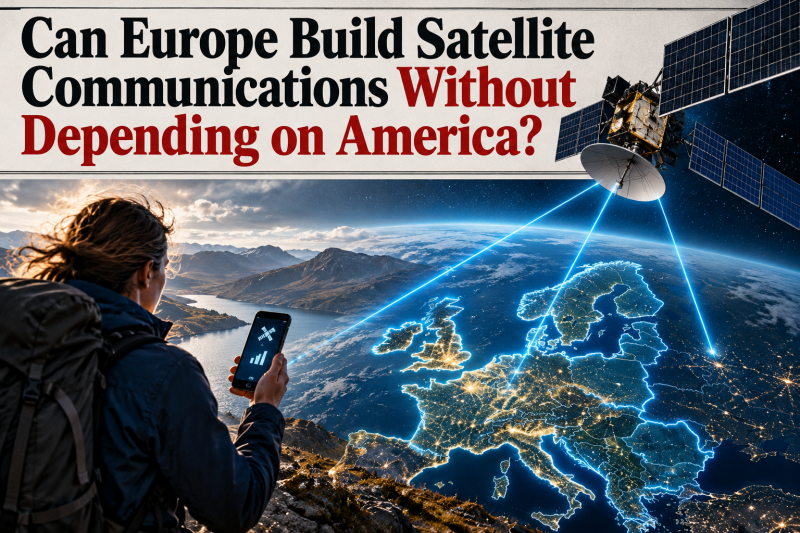
Can Europe Build Satellite Communications Without Depending on America?
Space Science & Technology | 25 October 2026
Four major European telecommunications companies are exploring a satellite-to-phone communications service that could reduce Europe's reliance on American technology. But will the proposed network deliver genuine European independence?
Britain's Vodafone, Germany's Deutsche Telekom, France's Orange and Spain's Telefónica signed a letter of intent on 19 October to investigate a shared Direct-to-Device (D2D) service, allowing compatible mobile phones to connect to satellites beyond conventional network coverage.
The initiative could improve connectivity in remote areas and provide essential communications during emergencies. European operators would also seek greater control over ground infrastructure and network management.
However, one important question remains: who will control the satellites themselves?
The companies intend to select an external satellite operator rather than establish their own constellation. If that provider is American, Europe could remain dependent on US-controlled infrastructure despite operating its own ground systems.
Such dependence raises wider concerns about technological sovereignty, particularly given the unpredictability of American policy and the potential consequences of relying on foreign-controlled communications services.
Could Europe maintain independent communications if access to those satellites were restricted or withdrawn?
The answer will depend on the eventual satellite provider, contractual arrangements and the extent of European operational control.
European independence requires more than European ground infrastructure. It also requires control over the technology that keeps those communications working.