

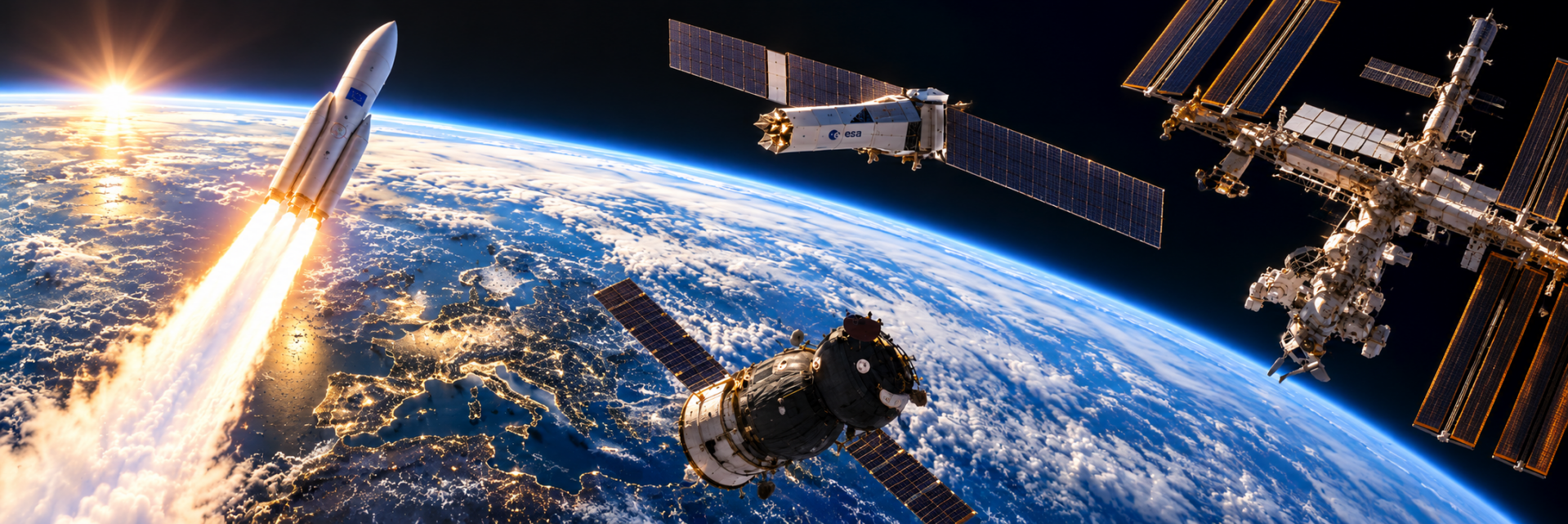
Space Science & Exploration
Exploring the Universe — Planetary Science & European Space Exploration
Space science reveals the extraordinary diversity of our universe, from the planets, moons, asteroids and other celestial bodies within our Solar System to distant planetary systems orbiting stars beyond our own.
This educational section explores the characteristics, environments and scientific discoveries associated with these worlds, including Mars, Earth's Moon, the outer planets, natural satellites and potentially habitable exoplanets such as those within the TRAPPIST-1 system.
Alongside this broader understanding of astronomy and planetary science, particular attention is given to Britain, the European Space Agency (ESA) and the rest of Europe's contributions to space exploration, highlighting European spacecraft, launch systems, scientific instruments and technological achievements.
International cooperation is also explored where relevant, including ESA's partnerships with Japan on the Martian Moons eXploration (MMX) mission and other collaborative programmes involving international space agencies.
The objective is to provide accessible, scientifically accurate information about the worlds beyond Earth while showcasing Europe's role in exploring them, developing independent space capabilities and contributing to major international discoveries.
Explore the sections below to discover the Solar System, distant worlds and the missions expanding our understanding of the universe.

European Space & Space Technology
Follow the development of Europe’s rapidly evolving space sector — from commercial launch vehicles and UK spaceports to ESA science missions, Earth observation and planetary exploration. Coverage includes RFA One and SaxaVord, Isar Aerospace, HyImpulse, Ariane 6, Copernicus, BepiColombo, European Mars exploration and emerging propulsion technologies such as Pulsar Fusion’s innovative Sunbird.
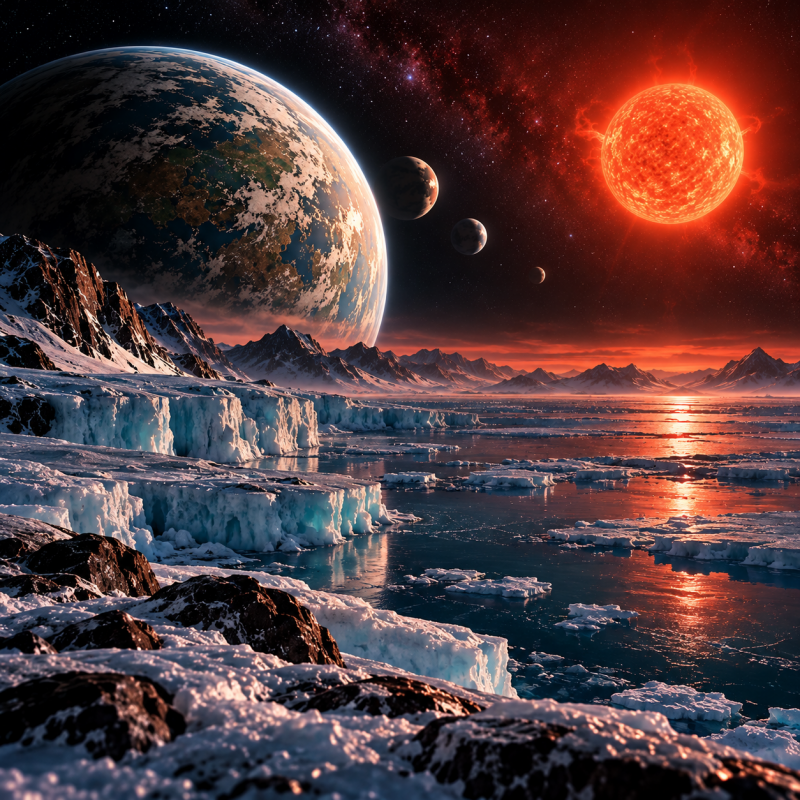
Potentially Habitable Exoplanets
Explore the search for potentially habitable planets beyond our Solar System, including TRAPPIST-1e and TRAPPIST-1f. Discover how astronomers investigate distant rocky worlds, planetary atmospheres and the conditions necessary for liquid water, using observations from the James Webb Space Telescope and European research facilities to assess the possibility of life beyond Earth.

Mars — The Red Planet
Explore Mars, the Red Planet, through its geology, atmosphere, ancient water systems and the search for extraterrestrial life. Discover the history of Mars exploration, its two moons, Phobos and Deimos, and the latest scientific discoveries and future missions shaping our understanding of this fascinating world.