

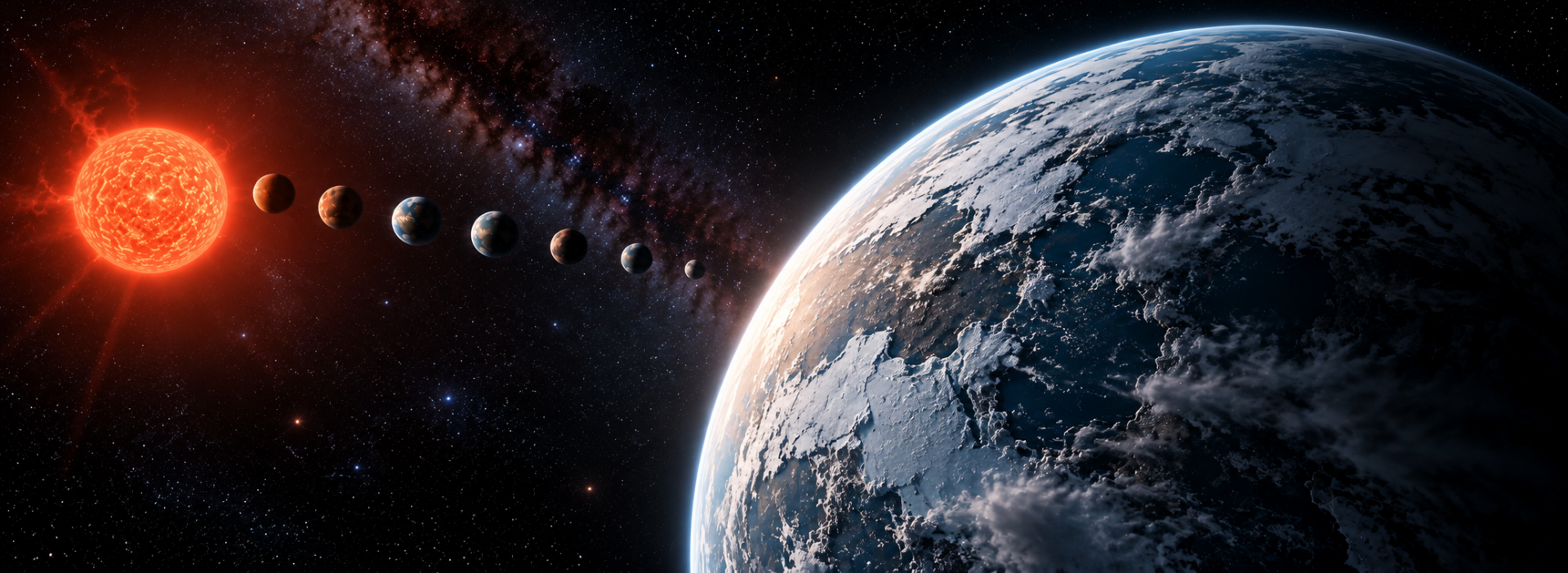
TRAPPIST-1f
TRAPPIST-1f — A Potentially Habitable World
Located approximately 40 light-years from Earth in the constellation Aquarius, TRAPPIST-1f is a rocky, Earth-sized exoplanet orbiting an ultracool red dwarf star. It is one of seven confirmed planets in the TRAPPIST-1 system and one of three commonly identified within the star's habitable zone.
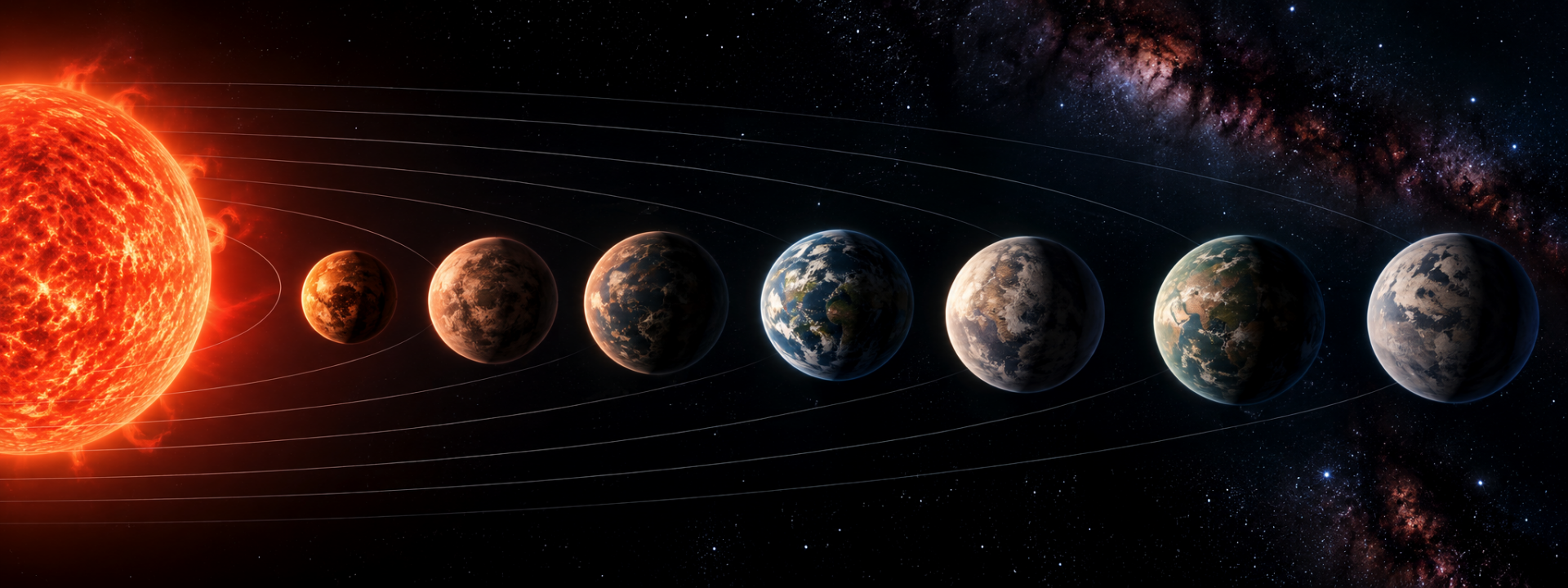
TRAPPIST-1f is slightly larger than Earth, with a mass approximately 104% of Earth's and a radius around 105% of Earth's. It completes an orbit every 9.2 Earth days and receives considerably less stellar radiation than our planet.
Its location within the habitable zone makes it an important target for investigating whether rocky planets orbiting red dwarf stars can retain atmospheres and potentially support liquid water.
Observations published in October 2026 using the James Webb Space Telescope have ruled out certain hydrogen-rich atmospheric conditions, although heavier atmospheres remain possible. Scientists have not confirmed the presence of an atmosphere, surface water or conditions capable of supporting life.
The TRAPPIST-1 Planetary System
TRAPPIST-1 is an ultracool red dwarf star located approximately 40 light-years from Earth in the constellation Aquarius. With only around 9% of the Sun's mass, it is considerably smaller, cooler and less luminous than our own star.
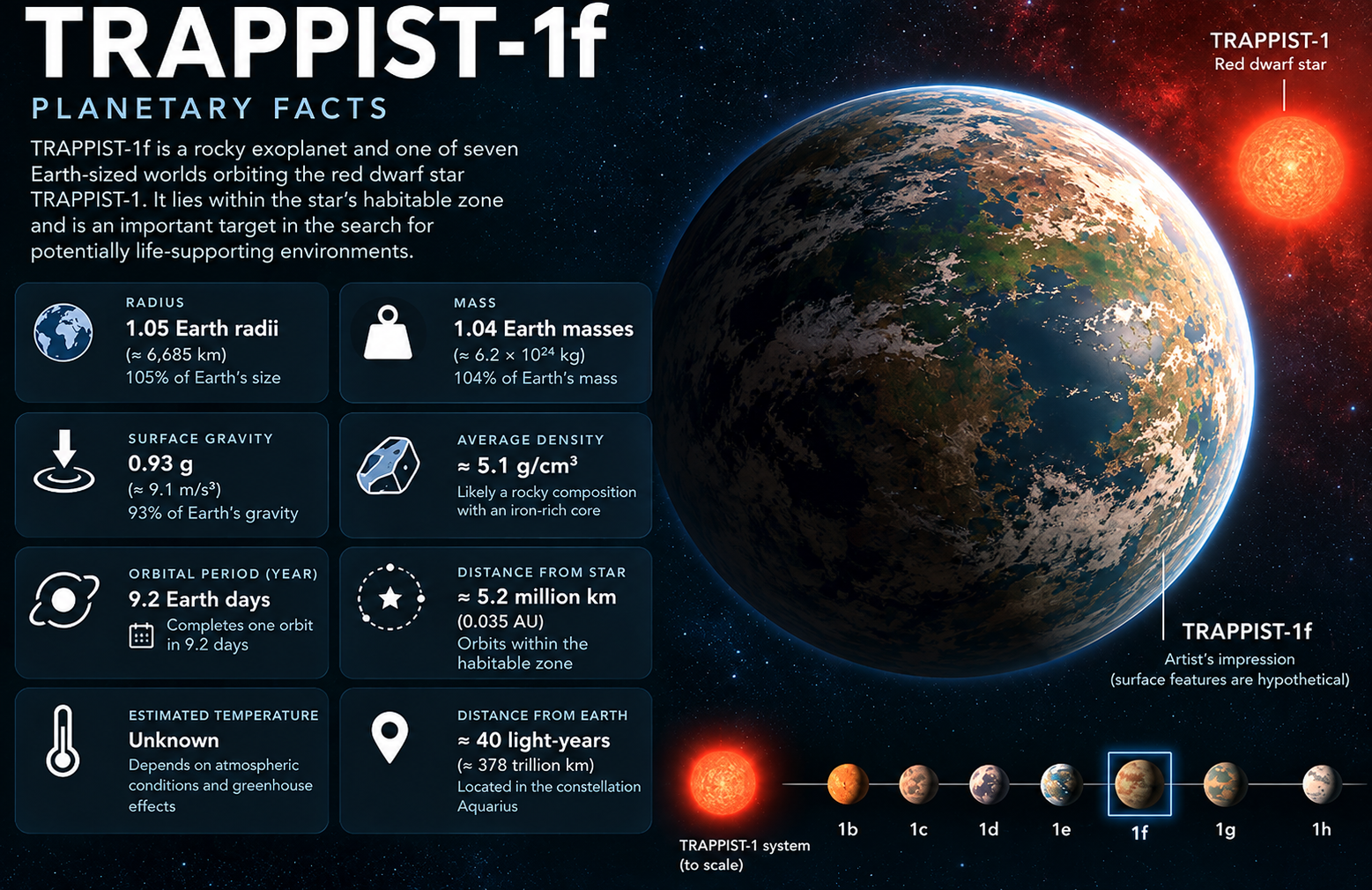
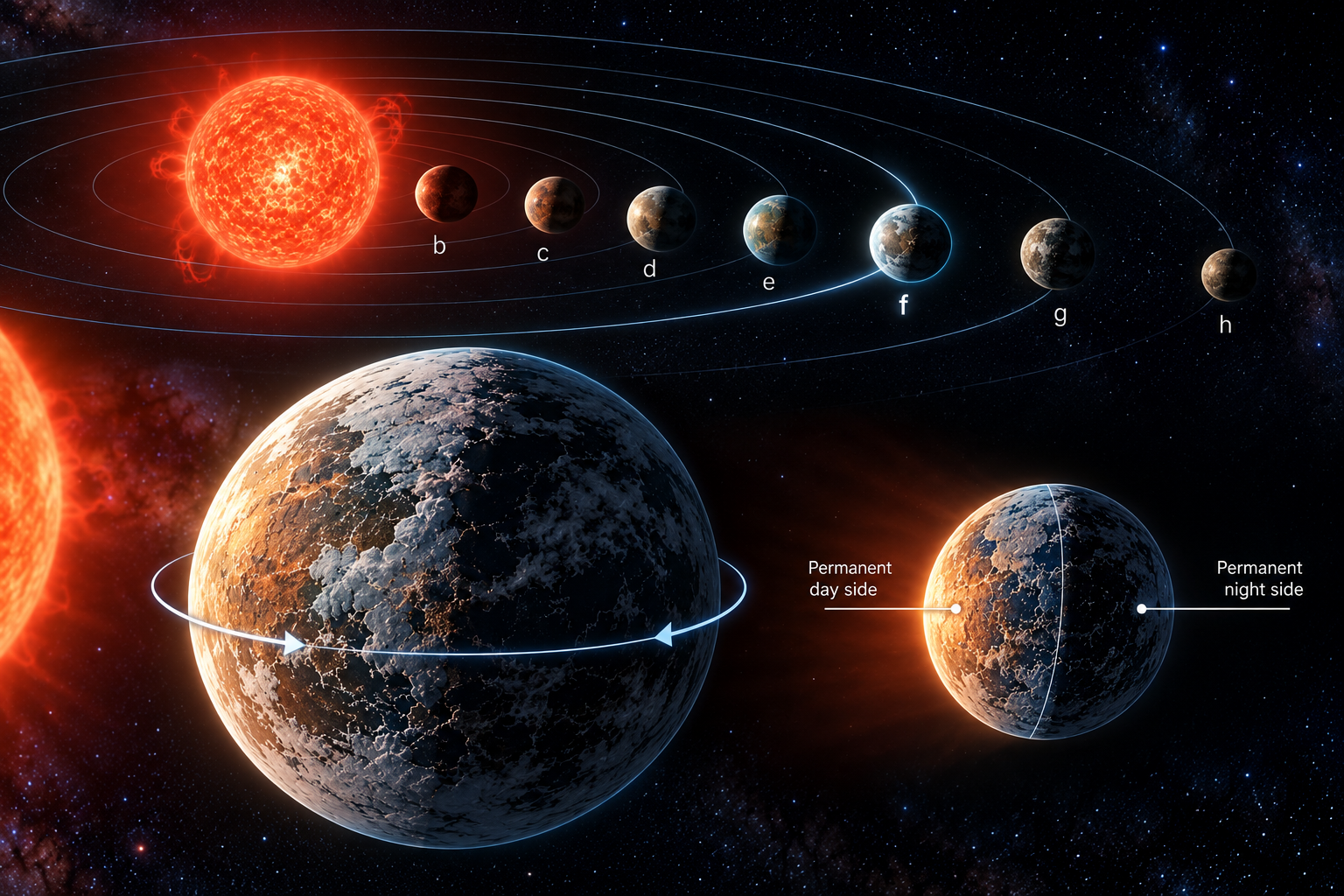
Seven confirmed rocky planets orbit TRAPPIST-1, all travelling much closer to their host star than Mercury orbits the Sun. Despite their proximity, the star's low luminosity means that several receive levels of radiation potentially compatible with liquid water under suitable atmospheric conditions.
TRAPPIST-1f is the sixth planet from the star, orbiting between TRAPPIST-1e and TRAPPIST-1g. These three planets are commonly identified as occupying the system's habitable zone, although the precise boundaries depend on atmospheric and climate assumptions.
Studying these neighbouring worlds allows astronomers to compare how differences in stellar radiation, atmospheric evolution and planetary composition might influence habitability within the same planetary system.
The TRAPPIST-1 Planetary System (artist's impression).
The Discovery of TRAPPIST-1f
The TRAPPIST-1 planetary system was first identified in 2016 by an international team led by Belgian astronomer Michaël Gillon at the University of Liège. Using the TRAPPIST-South telescope at the European Southern Observatory's La Silla Observatory in Chile, researchers initially discovered three planetary candidates orbiting the ultracool red dwarf star.
Further observations using NASA's Spitzer Space Telescope, supported by ground-based observatories, revealed seven planets, announced in February 2017. TRAPPIST-1f was among the newly identified worlds, attracting particular scientific interest because of its Earth-like dimensions and location within the star's habitable zone.
The discovery represented a major achievement for European-led astronomy and established TRAPPIST-1 as one of the most important planetary systems for investigating potentially habitable environments beyond our Solar System.
Subsequent observations have refined TRAPPIST-1f's mass, radius and orbital characteristics, while the James Webb Space Telescope is now helping astronomers investigate whether it retains an atmosphere.
Size, Mass and Physical Characteristics
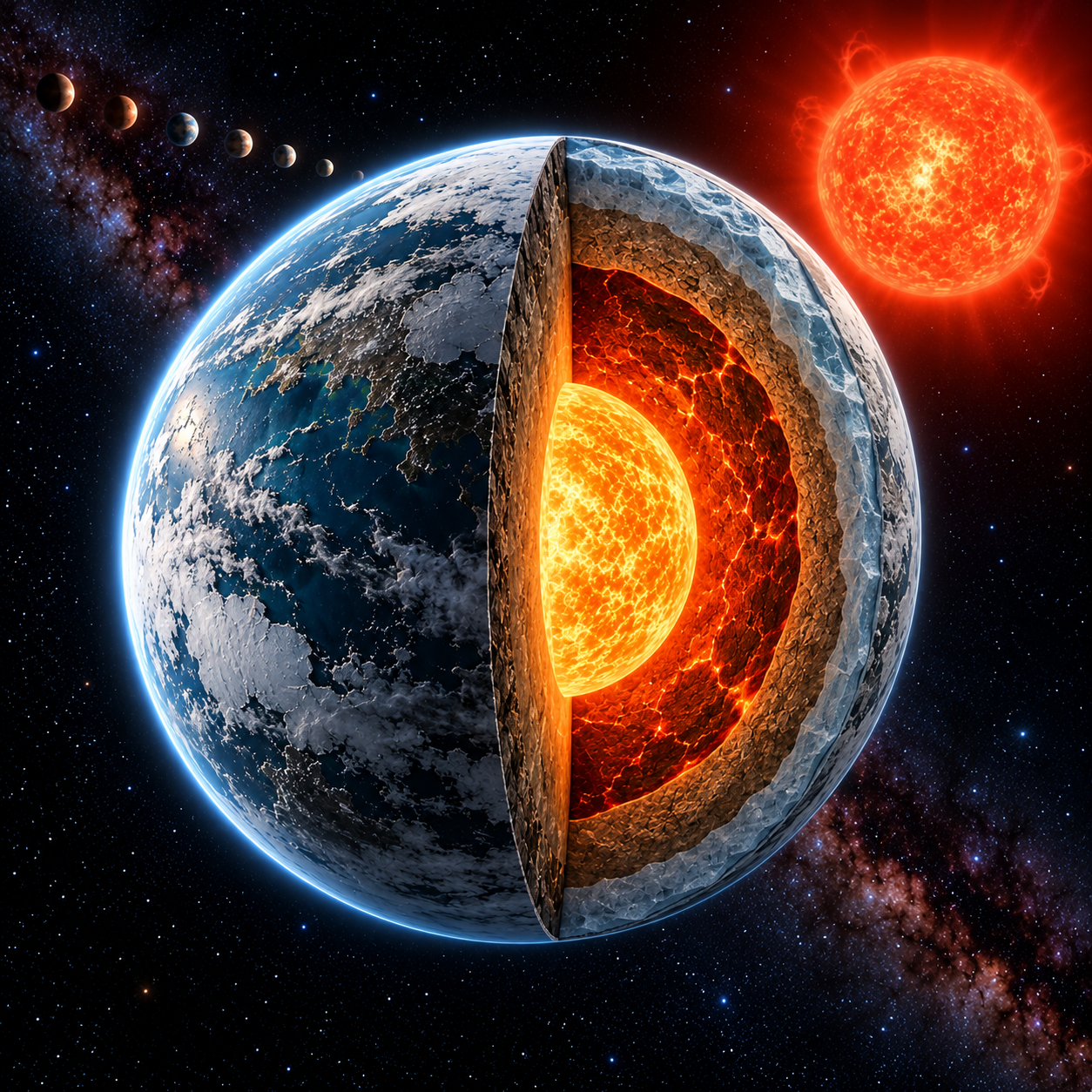
TRAPPIST-1f is a rocky exoplanet with a radius approximately 105% that of Earth and a mass around 104% of Earth's. Its estimated surface gravity is approximately 93% of Earth's, while its average density of roughly 5.1 g/cm³ suggests a predominantly rocky interior.
Although its physical characteristics resemble Earth's, scientists have not directly observed its surface or internal structure. Its precise composition remains uncertain, and models allow for different proportions of rock, iron and potentially volatile materials, including water.
Whether TRAPPIST-1f possesses mountains, oceans, extensive ice deposits or other geological features remains unknown. Its Earth-like dimensions make it an important subject for comparative planetary science, but they do not establish Earth-like surface conditions.
Orbit and Tidal Locking
TRAPPIST-1f completes one orbit around its parent star approximately every 9.2 Earth days, at a distance of roughly 5.7 million kilometres (0.038 AU).
Despite orbiting much closer to its star than Earth does to the Sun, TRAPPIST-1f receives only around 38% of Earth's incoming stellar energy because TRAPPIST-1 is considerably smaller and cooler than our Sun.
The planet is expected to be tidally locked, meaning one hemisphere may experience permanent daylight while the opposite remains in darkness. The boundary between these regions is known as the terminator.
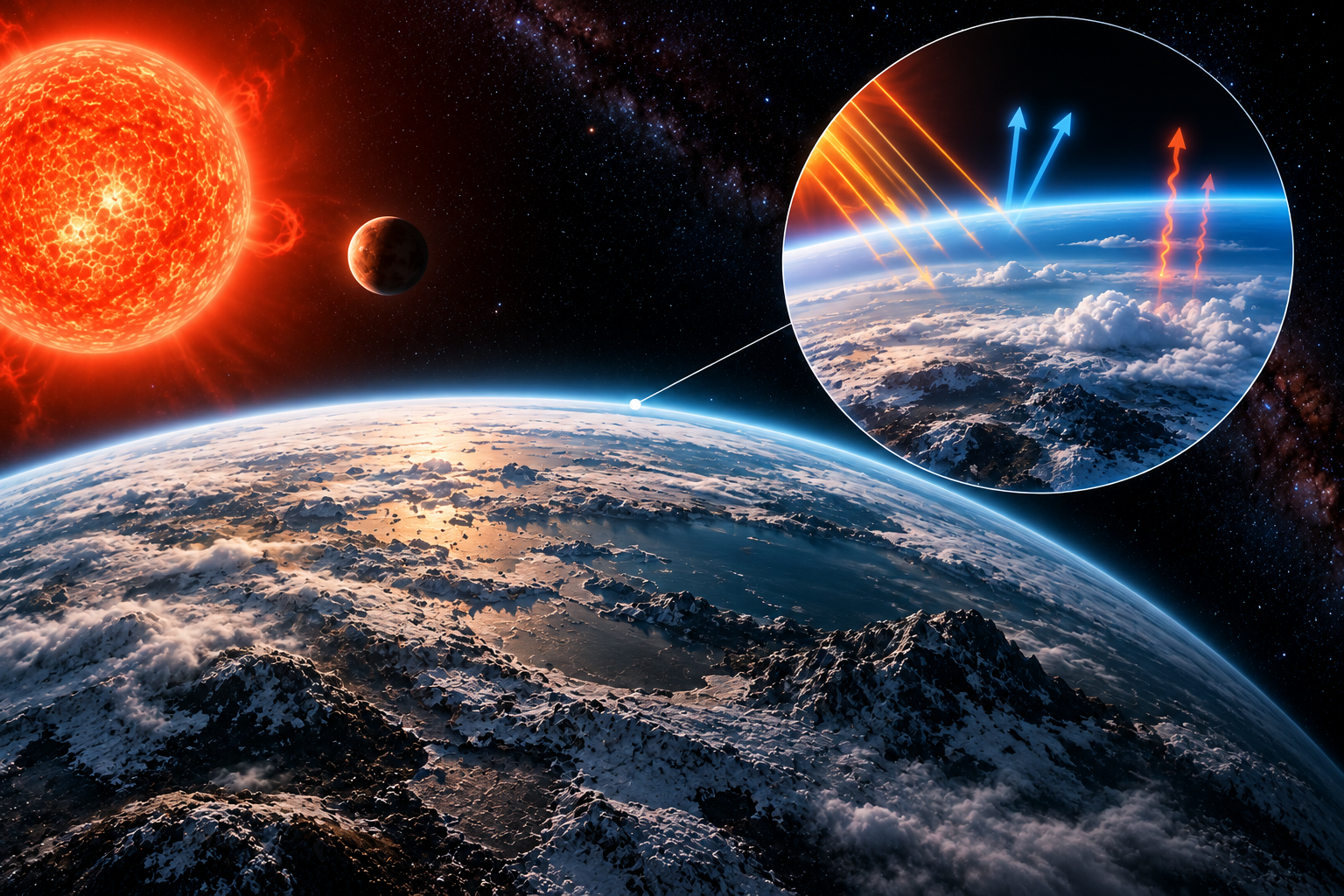
If TRAPPIST-1f possesses a sufficiently substantial atmosphere, atmospheric circulation could redistribute heat between its illuminated and dark hemispheres. Without such an atmosphere, extreme temperature differences could develop.
Atmosphere and Climate
Whether TRAPPIST-1f possesses an atmosphere remains one of the most important unanswered questions about the planet.
Research published in October 2026, using observations from the James Webb Space Telescope's NIRISS instrument, analysed five planetary transits. The findings ruled out certain hydrogen–helium-dominated atmospheric models, including pressures above approximately 20 millibars at 95% confidence in the observations least affected by stellar flares.
However, heavier atmospheres, potentially containing gases such as nitrogen or carbon dioxide, have not been conclusively excluded. An airless environment also remains possible.
If an atmosphere exists, its composition, pressure and greenhouse effects would strongly influence the planet's climate and the possibility of surface liquid water. Continued observations are needed to distinguish atmospheric signals from interference caused by activity on the host star.
Water, Oceans and Ice

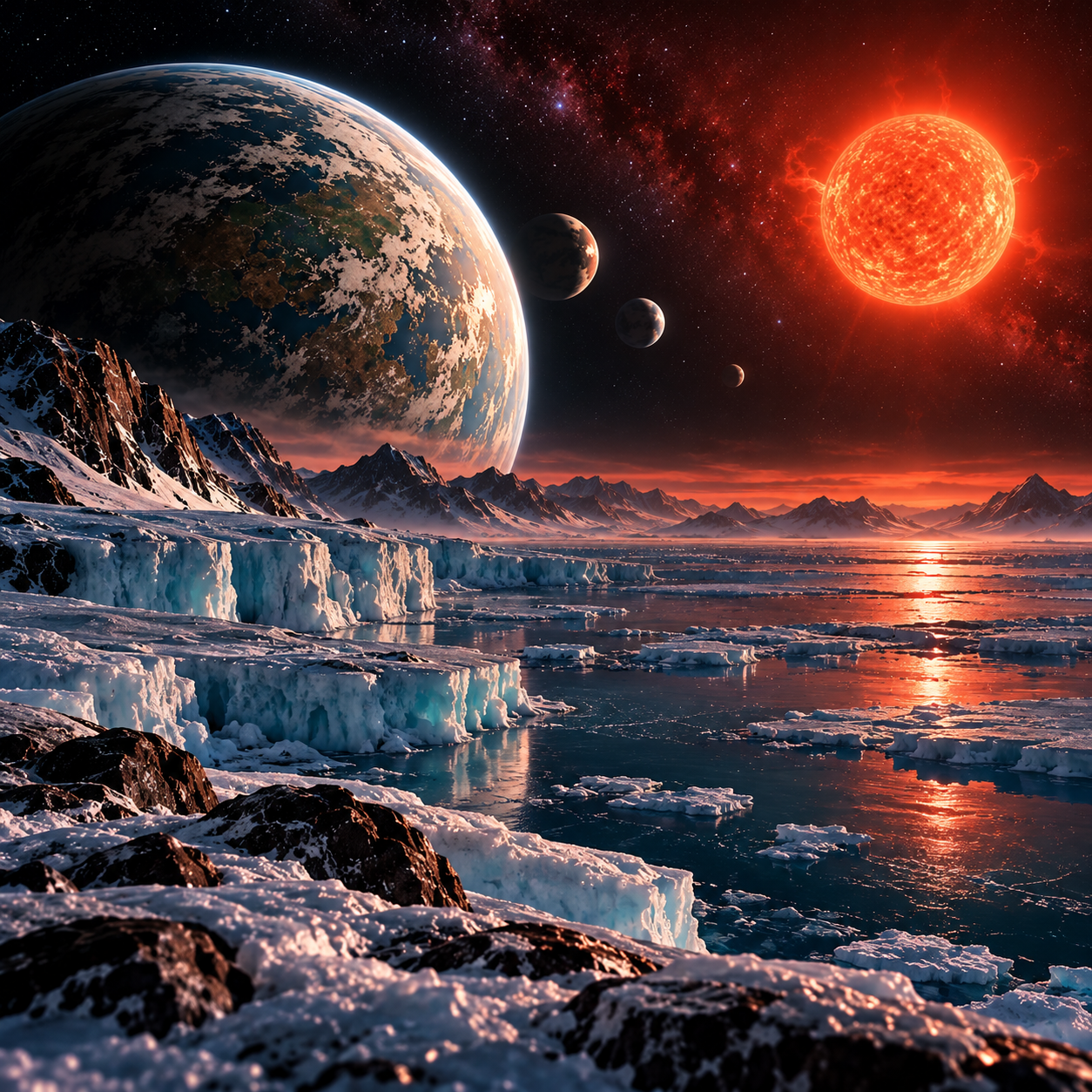
Artist's impression.
TRAPPIST-1f orbits within its star's habitable zone, although it receives considerably less stellar radiation than Earth. Climate simulations suggest that liquid water might exist on its surface if the planet possesses a sufficiently substantial atmosphere capable of maintaining suitable temperatures through greenhouse warming.
Because TRAPPIST-1f is expected to be tidally locked, its permanently illuminated hemisphere could experience very different conditions from its dark hemisphere. Depending on atmospheric composition and circulation, extensive ice deposits, frozen oceans or regions of liquid water are theoretically possible. Some models also investigate whether geothermal heating could help maintain liquid water beneath an icy surface.
However, no water, oceans or surface ice have been directly confirmed on TRAPPIST-1f. Its atmospheric conditions remain unknown, and its location within the habitable zone alone does not establish that liquid water exists. Determining whether the planet retains an atmosphere is therefore essential to assessing its potential habitability.
The Search for Life
TRAPPIST-1f is an important target in the search for extraterrestrial life because of its rocky composition, Earth-like dimensions and location within its star's habitable zone. However, receiving potentially suitable levels of stellar radiation does not establish that the planet supports life.
Scientists are particularly interested in whether TRAPPIST-1f possesses a stable atmosphere, liquid water and the chemical conditions necessary for biological activity. Its relatively low stellar energy makes atmospheric greenhouse warming especially important when considering possible surface habitability.
Astronomers also investigate potential biosignatures, including atmospheric gases such as oxygen and methane. However, these substances can arise through non-biological processes, making their interpretation challenging.
No biosignatures or evidence of life have been detected on TRAPPIST-1f. Establishing whether the planet possesses an atmosphere remains an essential first step before its biological potential can be meaningfully assessed.
The James Webb Space Telescope
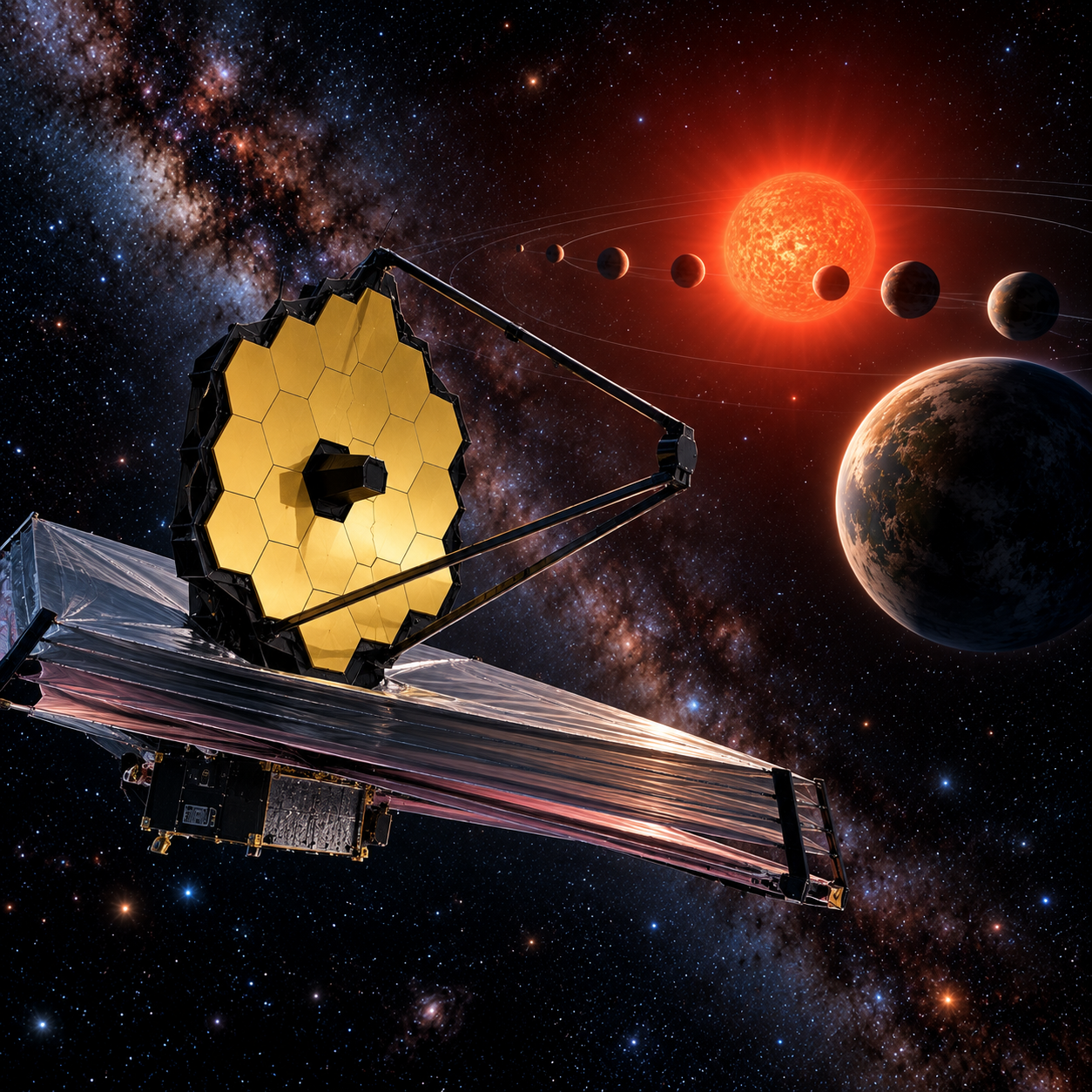
The James Webb Space Telescope (JWST), developed through cooperation between NASA, the European Space Agency (ESA) and the Canadian Space Agency (CSA), is helping astronomers investigate TRAPPIST-1f from approximately 40 light-years away.
Using infrared spectroscopy, scientists analyse changes in starlight as the planet passes in front of its host star, searching for evidence of atmospheric gases.
Research published in October 2026 examined five planetary transits observed using Webb's NIRISS instrument. The findings ruled out certain hydrogen–helium-dominated atmospheres but could not establish whether TRAPPIST-1f possesses a heavier atmosphere.
One major challenge is separating potential atmospheric signals from interference caused by stellar activity, including flares and variations across the star's surface.
Further observations and improved analytical techniques may help determine whether TRAPPIST-1f retains an atmosphere and what its composition could reveal about planetary habitability.
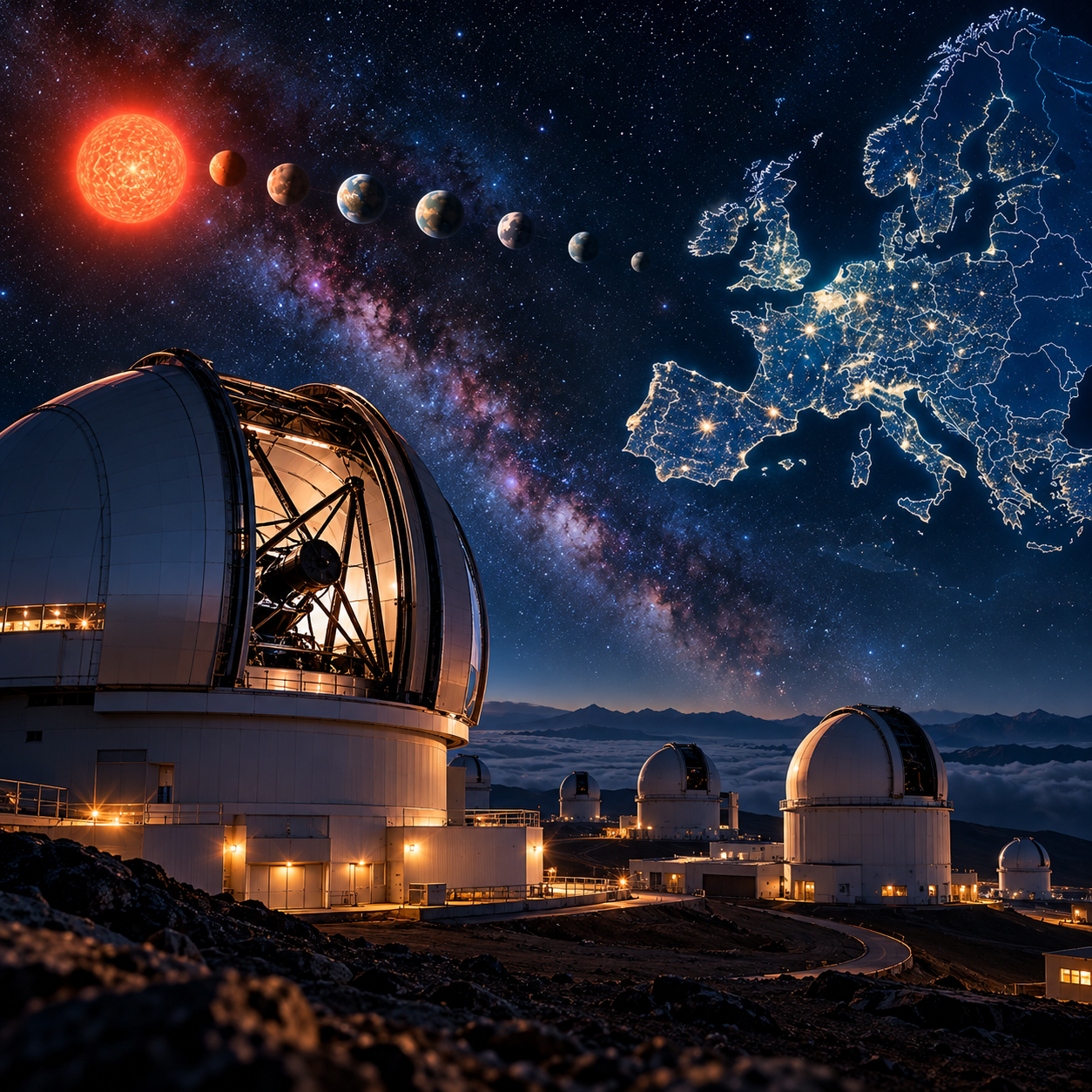
European Contributions to TRAPPIST-1 Research
European astronomers played a leading role in discovering the TRAPPIST-1 planetary system. The initial discovery in 2016 was led by Belgian astronomer Michaël Gillon and researchers at the University of Liège, using the TRAPPIST-South telescope at the European Southern Observatory's La Silla site in Chile.
Further international observations established the existence of seven Earth-sized planets, announced in February 2017.
European scientists continue contributing to atmospheric investigations, planetary modelling and the interpretation of James Webb observations. Researchers from institutions across Europe, including the United Kingdom, have participated in studies of the TRAPPIST-1 system.
ESA also contributes to Webb through scientific instruments and mission operations. Its future PLATO and Ariel missions will expand our understanding of exoplanet populations and atmospheric chemistry, although neither is specifically designed to investigate TRAPPIST-1f.
These international efforts are helping scientists understand whether rocky planets orbiting small red dwarf stars can retain environments potentially suitable for liquid water.
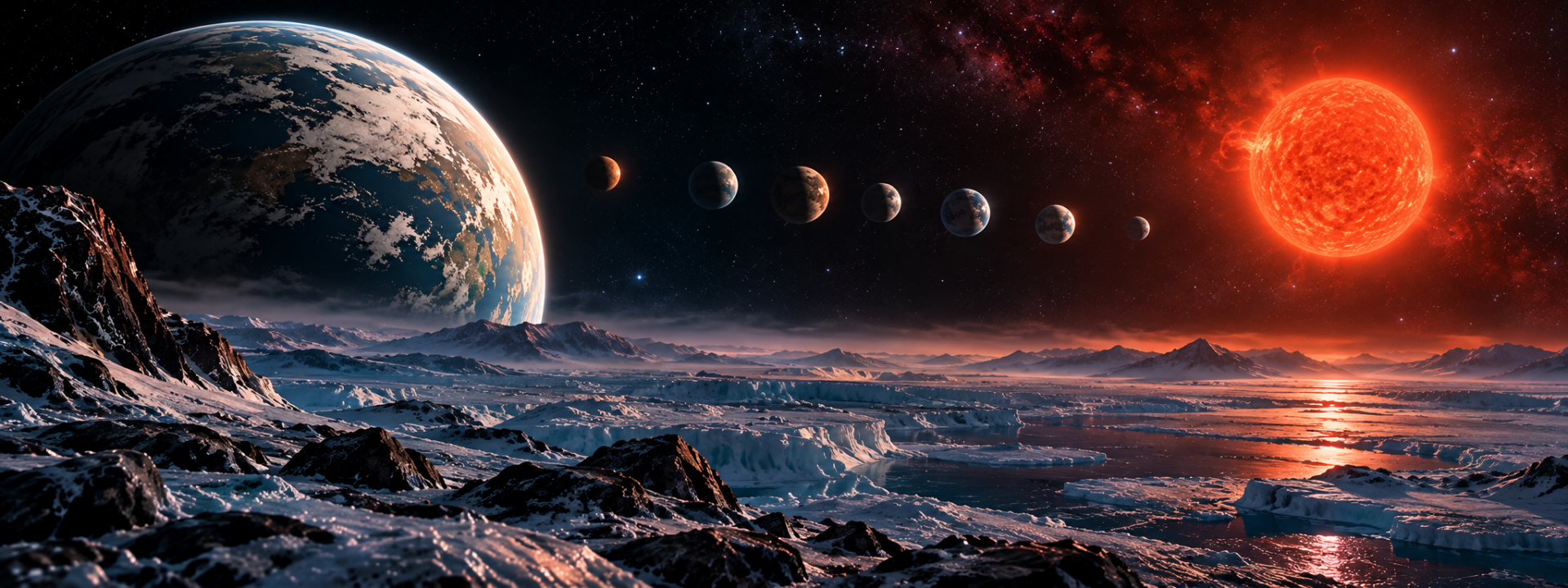
The Future of TRAPPIST-1f Research
Future investigations of TRAPPIST-1f will focus on determining whether the planet retains a substantial atmosphere and whether its environmental conditions could potentially support liquid water.
Continued observations with the James Webb Space Telescope will help researchers investigate atmospheric composition, refine climate models and distinguish planetary signals from interference caused by the host star. These investigations are particularly important because TRAPPIST-1f receives considerably less stellar energy than Earth.
Scientists will also compare observations of TRAPPIST-1f with those of neighbouring planets, particularly TRAPPIST-1e and TRAPPIST-1g, to understand how atmospheres evolve under different levels of stellar radiation.
European research institutions will continue contributing to these investigations through atmospheric modelling, astronomical observations and international collaboration. Although direct spacecraft exploration remains beyond current capabilities, improved telescopes and analytical techniques could significantly advance our understanding of this distant world.
16th October 2026 — James Webb Narrows Atmospheric Possibilities for TRAPPIST-1f
Research published on 10th September 2026 in The Astronomical Journal presents the first James Webb Space Telescope transmission spectra of TRAPPIST-1f, obtained during five planetary transits.
The study found that observations least affected by stellar flares ruled out hydrogen–helium-dominated atmospheres with surface pressures above approximately 20 millibars, at 95% confidence.
However, atmospheres composed of heavier gases have not been conclusively excluded. Scientists also found no clear evidence of contamination from certain stellar surface features, although stellar flares affected the observations.
The findings provide important new constraints on TRAPPIST-1f's atmospheric possibilities but do not confirm whether the planet possesses an atmosphere, liquid water or conditions suitable for life.
The international research included European contributions, including scientists from the University of Oxford.
Last reviewed: 16th October 2026